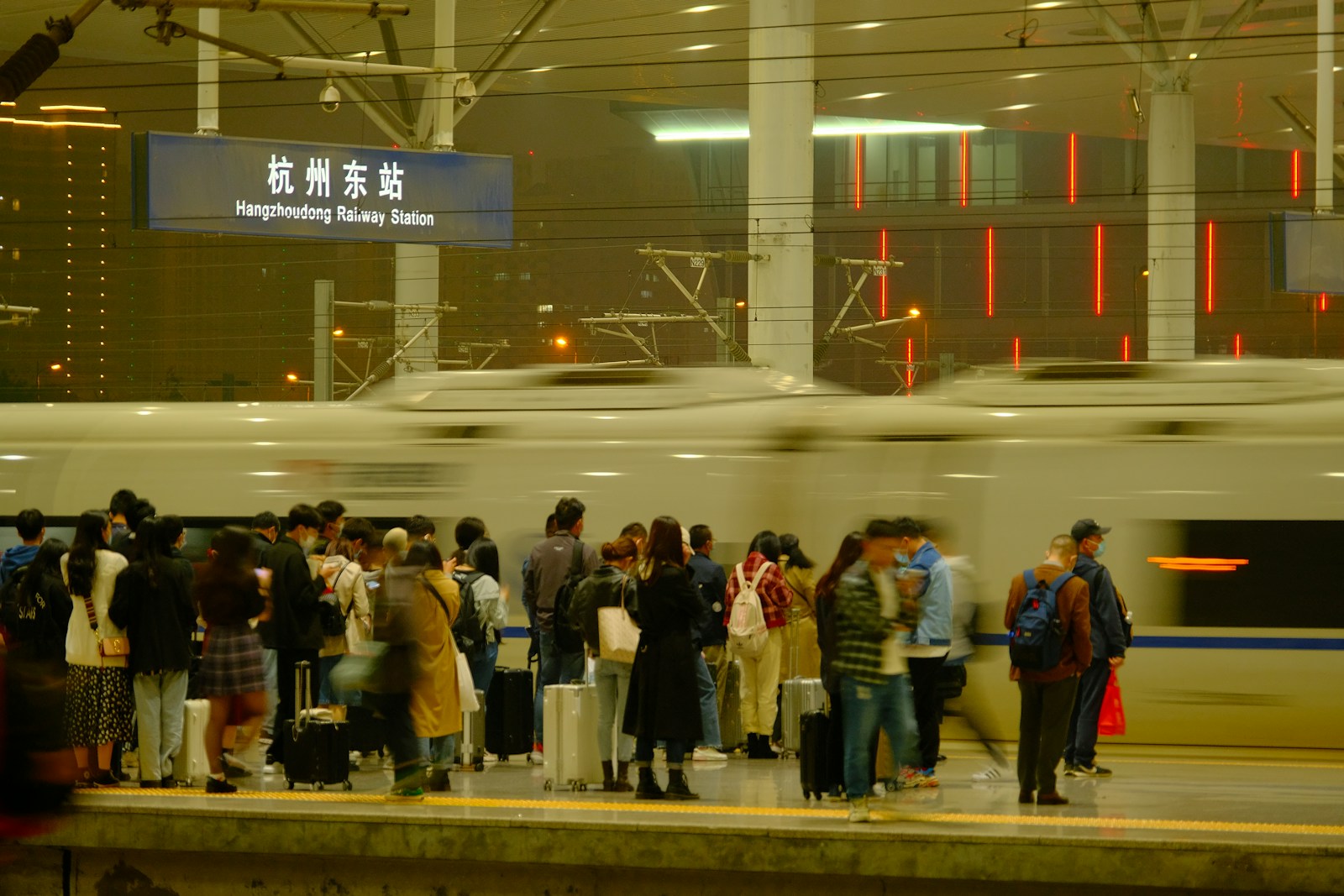
China’s bullet trains are fast, frequent, and, once you know the process, surprisingly easy to book in English. Whether you’re planning Beijing–Shanghai or a zigzag across multiple provinces, you can reserve seats on the official 12306 system or a trusted OTA without speaking Chinese. This guide walks you through exactly what you need, where to buy tickets, how to pay with foreign cards or e-wallets, and what to expect on boarding day.
What You Need Before You Book
Passport And Real-Name Policy
China’s railways use a real-name ticketing system. That means you must book with your actual travel document and carry it when you ride. For you, that’s your passport. The name and number on your ticket must match your passport exactly, no nicknames, no typos. You’ll need the same passport to pass station checks and for any changes or refunds.
If you’re booking for companions, you’ll add each traveler’s passport details. For kids: generally, children under 6 ride free without their own seat if they share yours: ages 6–14 are eligible for child fares: 14+ are adult fares. Bring their passports too. Rules can vary slightly, so check the fare shown during booking.
Understanding Train Types And Classes
You’ll mostly see three high-speed categories:
- G trains: the fastest long-distance services, cruising up to 350 km/h.
- D trains: high-speed but a bit slower: some run overnight with sleepers.
- C trains: intercity bullets between nearby cities.
Classes on daytime high-speed trains are simple: Second Class (best value), First Class (wider seats, 2+2 layout), and Business Class (recliners or pods at the very front and back, pricey but plush). Some routes offer a “Premium” or “New First” variant: the booking page will show what’s available.
Seat numbers are easy to read once you’re onboard: car number, then seat (like 06C). If your budget’s tight, Second Class is perfectly comfortable. If you’re tall or want elbow room, First Class is worth it. Business Class is a splurge for long legs or special occasions.
When Tickets Go On Sale
Most bullet train tickets open 15 days before departure on 12306 (the official system), with releases rolling out by station from morning through evening. If you don’t see your train right at midnight, don’t panic: availability often appears during daytime release windows. Unpaid orders also time out, usually in about 30 minutes, so seats pop back in waves. During holidays, book the minute sales open. Otherwise, a few days in advance is usually enough for major corridors like Beijing–Shanghai or Shanghai–Hangzhou.
Where To Buy Tickets In English
12306 Official App/Website
12306 is China Railway’s official platform. It now offers an English interface on the website and within the mobile app. Pros: the lowest fare, real-time seat inventory, official change/refund handling, and access to features like same-day changes and waitlists on many routes. Cons: first-time account verification can be fussy, and payments with foreign cards can be hit-or-miss unless you use a supported e-wallet.
In practice, you’ll have the smoothest checkout if you enable Alipay or WeChat Pay and link your international Visa/Mastercard there. Many travelers pay this way on 12306 without needing a Chinese bank account.
Third-Party Platforms (OTAs)
If you prefer a smoother English UX and straightforward foreign card payments, use a reputable OTA such as Trip.com (Ctrip) or a well-known China travel agency platform. You’ll pay a small service fee, but you get English support, price alerts, flexible cancellation options, and easier help if something goes wrong. For peak dates, OTAs can be worth it for instant confirmations and alternative routing suggestions.
Station Counters And Ticket Machines
Big-city stations have English signage and manned international counters. You can buy tickets with your passport on the spot if seats exist. Ticket machines mostly serve Chinese ID holders: some newer machines scan passports, but it’s not guaranteed. With e-tickets now standard nationwide, you generally don’t need to print anything: your passport acts as your ticket. Still, if you want a printed itinerary or a reimbursement coupon, ask at the counter.
Step-By-Step: Booking On 12306 In English
Create And Verify Your Account
- Download the 12306 app or go to the official site and switch to English. Create an account with your email and mobile number. A non-Chinese number typically works for verification codes.
- Add your passport under “My Passengers.” Enter your name exactly as on your passport and select “Passport” as the document type. Some users are prompted for manual verification, which can take a short while. If you’re traveling soon, do this step early.
Search Trains, Seats, And Passenger Details
Search by city pair and date. Many cities have multiple stations, like Beijing (BJ Main), Beijing South, Beijing West, so check your departure point carefully. The results show train numbers, times, duration, and available classes. Tap the class you want: if the button is grayed out, that class is sold out. Add each traveler from your passenger list before proceeding.
If you’re eyeing a popular morning G train, compare the next few departures. Sometimes leaving 20 minutes earlier saves you money or lands you a First Class seat while the later train has only standing tickets left.
Payment: Foreign Cards And E-Wallets
At checkout, 12306 typically supports Alipay and WeChat Pay. Both now allow many overseas users to link international Visa/Mastercard directly in-app. Once your wallet is set up, paying is smooth. Direct foreign card payment within 12306 is inconsistent: route it through Alipay/WeChat for best results.
If the official app declines your payment and you’re in a rush, shift to an OTA that accepts foreign cards natively. Keep in mind there’s a countdown to complete payment, if the timer expires, your seats go back into inventory.
E-Tickets Vs. Paper Pickup
China Railway uses e-tickets by default. After payment, your order shows a pickup code, but you don’t need to print it. On boarding day, you’ll enter the station with your passport, pass security, and have staff scan your passport at the gate or manual lane. If you prefer a paper slip for your records, visit the ticket office to print a reimbursement voucher, optional and not required for travel.
Changes, Refunds, And Cancellations
Change Policies And Deadlines
You can usually change to a different train or time on the same route before departure if seats exist. Do it in the 12306 app or at a station ticket office. Price differences apply if you upgrade classes or switch to a more expensive train. Close to departure, options narrow fast, so act early if your plans shift.
If you’ve already picked up a paper voucher, bring it and your passport for any changes at the station. With e-tickets only, your passport is enough.
Refund Rules And Fees
Refunds are straightforward on 12306. Fees depend on how early you cancel:
- More than 8 days before departure: typically fee-free.
- 48 hours to 8 days: around 5% fee.
- 24 to 48 hours: around 10% fee.
- Within 24 hours: around 20% fee.
Exact percentages can vary slightly by policy updates, but the earlier you cancel, the less you pay. If you booked via an OTA, check their service fee on top of the official refund rules.
If Your Train Is Delayed Or You Miss It
If your train is seriously delayed or canceled, you can usually change or refund at no charge at the station. Get a delay certificate from staff if needed. If you miss your train, go straight to the ticket office. In many cases, you can request endorsement to a later train the same day, subject to availability, seats aren’t guaranteed, and you may have to stand if it’s packed. Acting quickly gives you the best odds.
Boarding Day: From Station Entry To Your Seat
Security, Queues, And Gate Procedures
China’s major stations are more like airports than train depots. Aim to arrive 45–60 minutes early, or 90 minutes during holidays. First, you’ll pass a security check: bags through an x‑ray, you through a metal detector. Liquids are allowed, but no aerosols or dangerous goods: power banks should be under 100 Wh.
After security, follow signs to your waiting hall and gate (it’s shown on your ticket details in the app). Boarding gates open about 15–20 minutes before departure, sometimes earlier for long trains. Gates close a few minutes before departure. Many gates still route foreign passport holders to a staffed lane where an agent scans your passport, quick and painless.
Reading Tickets And Station Boards
Your e-ticket shows train number (like G101), departure time, station name, car number, and seat. Electronic boards list trains in both Chinese and English, flipping between them. If you’re at Beijing South, for example, watch for “Beijing South” or “Beijingnan” on boards and your app, it’s the same station. Once on the platform, look for signs along the platform canopy showing car numbers. Stand where your car will stop: ushers can help if you’re unsure.
Baggage Limits, Accessibility, And Etiquette
The official baggage allowance for adults is 20 kg, with size guidelines roughly up to a 24–26″ suitcase plus a backpack. In reality, staff are practical: if you can lift it and it fits on the overhead rack or the luggage bay at car ends, you’re fine. Don’t pack knives or flammables: keep power banks and laptops in your carry-on.
Most bullet train stations have elevators and accessible paths. If you need assistance, ask at the service desk: staff can arrange wheelchair help and early boarding. Onboard etiquette is simple: keep calls brief, speak softly, and don’t block the aisle with luggage. Eating is fine, try the bento boxes, but toss trash before you exit.
Planning And Troubleshooting Tips
Booking For Peak Seasons And Holidays
Chinese New Year, Golden Week (early October), Labor Day (May 1–5), and summer weekends sell out fast. If you’re traveling then, be ready the moment the 15‑day sales window opens. Have your 12306 account verified beforehand, passengers added, and your payment method working. If you miss the initial drop, check again when unpaid orders expire 25–30 minutes later, seats often reappear.
If Tickets Are Sold Out: Waitlists And Alternatives
12306 offers a waitlist feature on many G/D/C trains. You submit your request and pre-authorize payment: when seats free up, the system issues your ticket automatically. It’s convenient, but works best if you can pay through Alipay or WeChat Pay without issues. If you can’t use the waitlist, try an OTA’s “monitor and notify” option, split your journey with a transfer (for example, Hangzhou via Nanjing instead of direct to Shanghai), or consider slower D/C trains or different times of day. Standing tickets exist on some services but aren’t ideal for long routes.
If all else fails, look a day earlier or later, or flip your direction. Midday trains are often easier than Friday night or Monday morning peaks.
Useful Phrases And Station Name Tips
Station names often come with a compass word. “South” is Nan, “North” is Bei, “East” is Dong, “West” is Xi. So “Beijingnan” is Beijing South, “Shanghaihongqiao” is Shanghai Hongqiao, and “Guangzhounan” is Guangzhou South. If your city has multiple stations, double‑check both your departure and arrival, Beijing to Nanjing South is not the same as Beijing to Nanjing Main.
A few phrases help at counters: “Wǒ yào mǎi piào qù…” means “I want to buy a ticket to…”. Show your phone with the train number, date, and class: staff will understand immediately. Polite words, “xièxie” for thanks, go a long way.
Conclusion
If you set up your 12306 account early, add your passport, and test your payment method, booking China’s bullet trains in English is straightforward. Use the official app for the best prices and features, keep an OTA in your back pocket for tricky payments or sold‑out dates, and show up to the station a bit early with your passport. Do that, and you’ll glide from city to city at 300 km/h without breaking a sweat.
No responses yet